C. Schlereth, E. White, G. Chai, M. Lundberg, M.C. Galetz
Corrosion Science 261 (2026), 113593, DOI: 10.1016/j.corsci.2026.113593
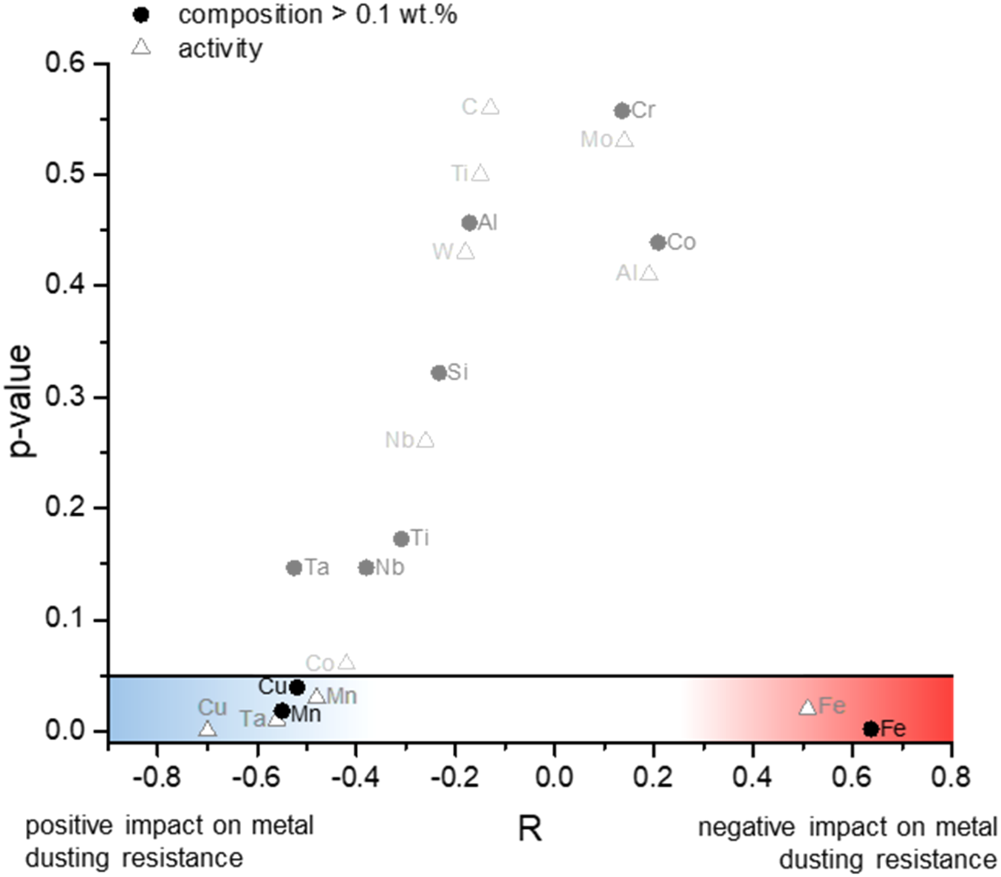
Ni-based multicomponent dilute alloys with 20 – 31 wt% Cr and mixed minor additions of Al, Si, Mn, Ti, Fe, Ta, Co, Nb, Cu, W, Mo, and C were tested to determine their metal dusting resistance. Samples were exposed in a 47 CO, 47 H2, 4 CO2 and 2 H2O atmosphere at 620 °C and 18 bar for up to 2970 h. An estimation of the pit area growth rate was used to categorize the metal dusting resistance of the alloys. Using these categories, a simple and a multiple linear regression analysis were performed to study the impact of each element. Within the studied alloys, Cu contents up to around 5 wt% were found to have a strong positive influence. Negative effects were seen for Fe additions of around 10–15 wt%. Statistically significant improvements in metal dusting resistance were also found for Mn and Ta additions. Some of the tested alloys showed an unusually shallow pit growth, which is promising for long-term applications in harsh metal dusting conditions.