P. Wolf, M.C. Galetz, E.M.H. White
Metallurgical and Materials Transactions A (2026), DOI: 10.1007/s11661-026-08276-y
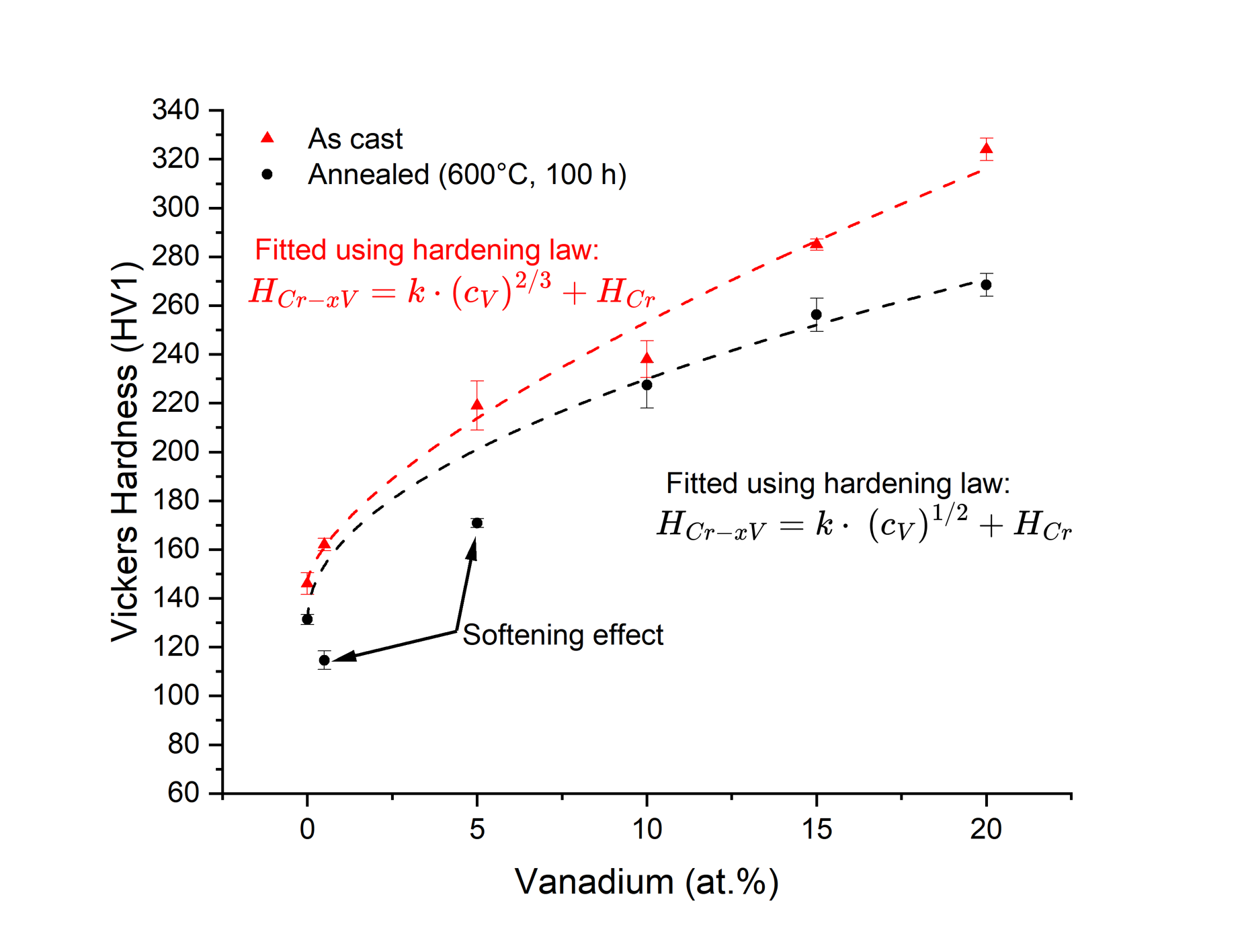
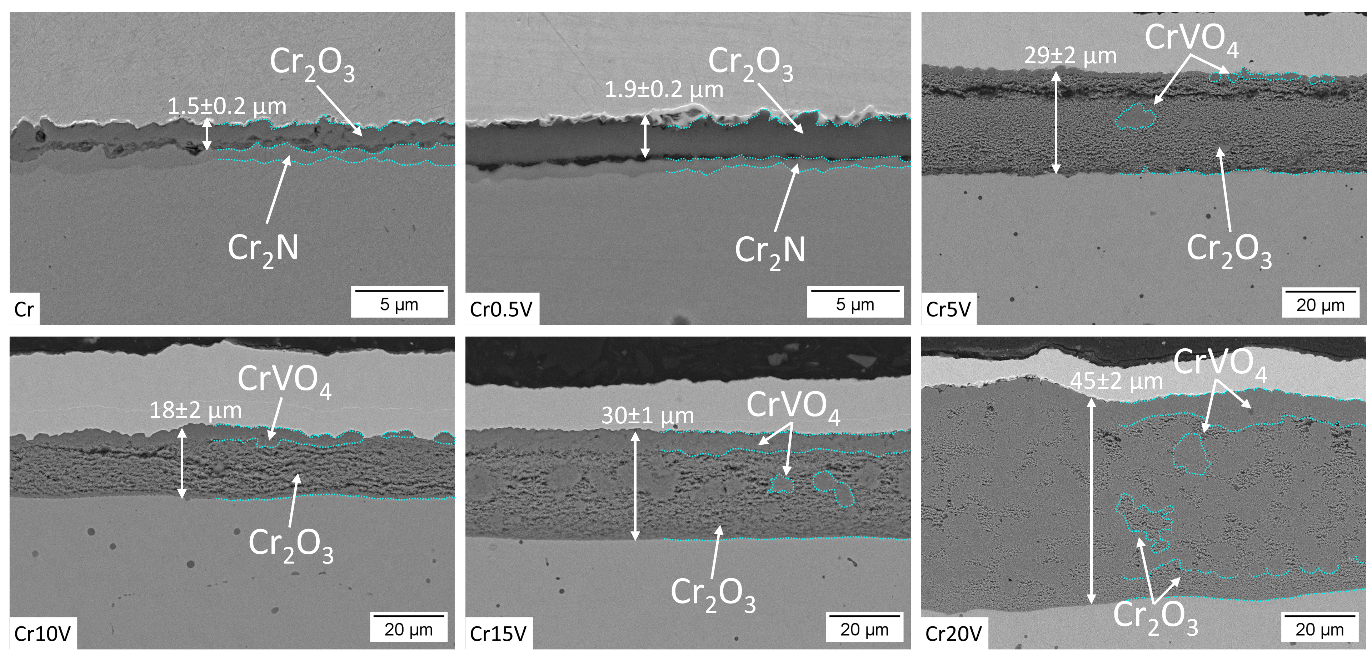
Lighter-weight, high melting materials, such as chromium or vanadium, are of interest to replace Ni-based superalloys in certain high-temperature applications. Cr and V alloys are also being investigated as structural materials for nuclear fusion applications. The influence of V additions (0 to 20 at pct) to Cr was investigated by analyzing arc-melted alloy samples in the as-cast and annealed states. Samples were characterized by X-ray diffraction, scanning electron microscopy, density measurements, Raman spectroscopy, and wavelength-dispersive X-ray spectroscopy. Vickers hardness and nanoindentation tests were performed to investigate the ductilizing effect of V additions to Cr. The oxidation resistance was tested by quasi-isothermal exposures at 800 °C for up to 300 h in synthetic air. A paralinear law was used to describe the transition from the parabolically grown Cr2O3 oxide scale on pure Cr to the linearly grown, mixed Cr2O3/CrVO4 scale on Cr–xV alloys. In the analyzed oxide scales of the alloys, no low melting, carcinogenic V2O5 was detected. While nitridation occurred below the oxide scale for pure Cr, no nitridation was present below the mixed oxide scale of the V > 5 at pct alloys.