01IF25306N
| Period: | 2026-08-01 to 2029-01-31 |
|---|---|
| Partner: | Technical University Braunschweig, Institute for Materials Science |
| Funder: | BMWE (IGF) |
| Project Manager: | Dr. Sigrid Benfer |
| Division: | Materials and Corrosion |
| Team: | Electrolytic Corrosion |
Description of the problem
Titanium alloys are among the most widely used biomaterials in medical technology. However, the alloys typically used have a modulus of elasticity that is too high for long-term use in the human body, which can lead to bone resorption around the implant (stress shielding) and implant loosening. In addition, the production of mass-produced implants is still predominantly carried out using conventional methods, whereas additive manufacturing - for example, using the PBF-LB/M process (powder bed fusion – laser beam/metal) - would enable direct, near-net-shape, and patient-specific manufacturing of implants with complex geometries, thereby also improving medical care.
Approach
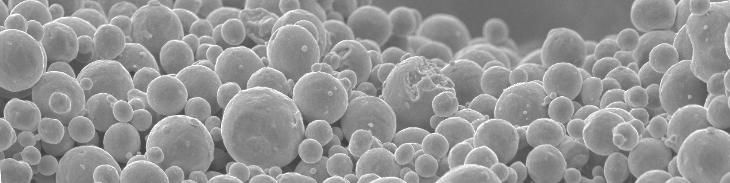
For this reason, PBF-LB/M printing of the Ti-15Mo titanium alloy will be investigated primarily for the production of dental implants. Advantages of the alloy include (with proper heat treatment) a lower modulus of elasticity and thus reduced stress shielding; the ability to adjust the microstructure and mechanical properties over a wide range through heat treatment; and the existing standardization of the alloy (as a wrought alloy) for use as an implant material. The research project aims to determine suitable PBF-LB/M process parameters, optimize microstructure and properties through subsequent hot isostatic pressing, and investigate (tribo-)corrosion as well as the surface engineering of printed components. By the end of the project, a process chain for the manufacture of Ti-15Mo components - particularly dental implants - will be available to SMEs. This will enable SMEs, on the one hand, to utilize the economic advantages of the PBF-LB/M process in product manufacturing and the medical benefits of the Ti-15Mo alloy. On the other hand, the greater freedom of design and the ability to print patient-specific implants will enable SMEs to secure new market shares.
back

Das Projekt wird durch das Bundesministerium für Wirtschaft und Energie aufgrund eines Beschlusses des Deutschen Bundestages gefördert.